Septic Tank Inspection
Buying a home with a septic system? Selling one? An inspection tells you what the tank and the field are really worth before money changes hands. Call (805) 307-3409 to book.
 Septic Tank
A septic system is the one part of a house that a buyer cannot see and a seller cannot prove with a fresh coat of paint. It sits underground, it costs five figures to replace, and its condition decides whether a sale closes smoothly or falls apart in escrow. A proper inspection is the only way to know what is down there before a purchase, a sale or a repair decision is made.
An inspection is not a pump-out, and a pump-out is not an inspection. Pumping empties the tank. Inspecting examines it: the baffles, the filter, the sludge levels, the tank walls, the distribution box, the field and the flow. A home inspector who glances at the lid and moves on has not inspected the system. A septic inspection opens the tank, measures what is in it, tests how the field performs, and puts the findings in writing.
Waste Cleanup Services, operating as Flex Sanitation, is a family owned and operated septic company based at 934 Warwick Ave in Thousand Oaks, serving Thousand Oaks, Newbury Park, Westlake Village, Agoura Hills and Moorpark. We are licensed, bonded and fully insured, and we provide septic inspections and real estate certifications. This page explains what an inspection covers, how the standard checklist works, what inspectors look for in the tank and the field, and what an inspection costs.
What a septic inspection covers
A full septic inspection covers the whole system, from the house to the field. It starts with the records: the permit, the design drawings if they exist, the age of the system, and the history of pump-outs and repairs. Records tell the inspector what the system was designed to be, so the fieldwork can check whether it still is. A system with no records at all is common on older properties, and the inspection becomes the record.
The fieldwork covers the tank, the components and the field. The tank is opened, the sludge and scum layers are measured, the baffles and filter are checked, and the walls and lid are examined. The distribution box is checked for level. The field is walked and tested for surfacing effluent, odors and soggy ground. A flow test checks how the system handles water, and a camera inspection looks inside the lines where the eye cannot reach.
The result is a written report, not a verbal impression. The report lists what was found, what it means, and what should happen next, in plain language a buyer, a seller or a lender can act on. If the system passes, the report says so. If it needs a repair, the report says which one. If it has failed, the report says that too, and explains the options.
The EPA 14-step checklist
The inspection follows the fourteen-step checklist published by the U.S. Environmental Protection Agency for septic system evaluation. It is a sequence, not a suggestion: each step builds on the one before it, and skipping steps is how problems get missed. The checklist covers the records, the site, the tank, the components and the field, so that two inspectors looking at the same system reach the same conclusions.
The steps run from the paperwork to the ground: reviewing the system records and the site plan, locating the tank and the field, checking the site for surfacing effluent and odors, opening the tank, measuring the sludge and scum layers, inspecting the baffles and the effluent filter, checking the tank walls and lid, inspecting the distribution box, testing the flow, checking the field, and running a camera inspection of the lines where needed. Each finding is recorded as the inspector goes.
Homeowners sometimes ask whether a shorter inspection is enough. For a routine check on a system you know well, a basic visit may do. For a real estate transaction, a lender review or a system with symptoms, the full checklist is the right standard, because it is the one a buyer, a seller and a county reviewer can all rely on. Ask any inspector you hire whether they follow the full checklist, and ask to see the report format before you book.
What inspectors look for in the tank
Inside the tank, the inspector measures the sludge layer at the bottom and the scum layer at the top. Both grow between pump-outs, and together they show how full the tank is and whether it was pumped on schedule. A tank that is mostly sludge has been neglected. A tank with solids near the outlet is a field failure waiting to happen, because solids are about to leave the tank and clog the soil.
The baffles get a close look. The inlet baffle directs incoming wastewater down into the tank, and the outlet baffle keeps solids from flowing out to the field. A missing or broken outlet baffle is one of the most serious findings in an inspection, because it means the field has been receiving solids, possibly for years. The effluent filter, where fitted, is checked for clogging, and the tank walls and lid are examined for cracks, leaks and structural damage.
The inspector also checks the water level. A level that sits above the outlet pipe suggests the field is not accepting water. A level that sits far below it suggests a leak in the tank. Either finding points to a problem beyond the tank itself, and the inspection moves on to the field to confirm it.
What inspectors look for in the leach field
The field is inspected from the surface and from the flow. The inspector walks the field area looking for surfacing effluent, sewage odors, unusually lush or soggy grass, and any sign that wastewater is coming up instead of going down. A healthy field looks like ordinary lawn. A failing field announces itself with wet ground, smell and grass that grows far greener than the rest of the yard.
The flow test is the functional check. Water is run through the system and the inspector watches how the tank and the field respond. If the water level in the tank rises and stays up, the field is not taking water. If the field accepts the flow and the level falls back, the system is working as designed. The distribution box is checked for level at the same time, because a box that has settled sends all the water to one trench and overloads it while the others sit dry.
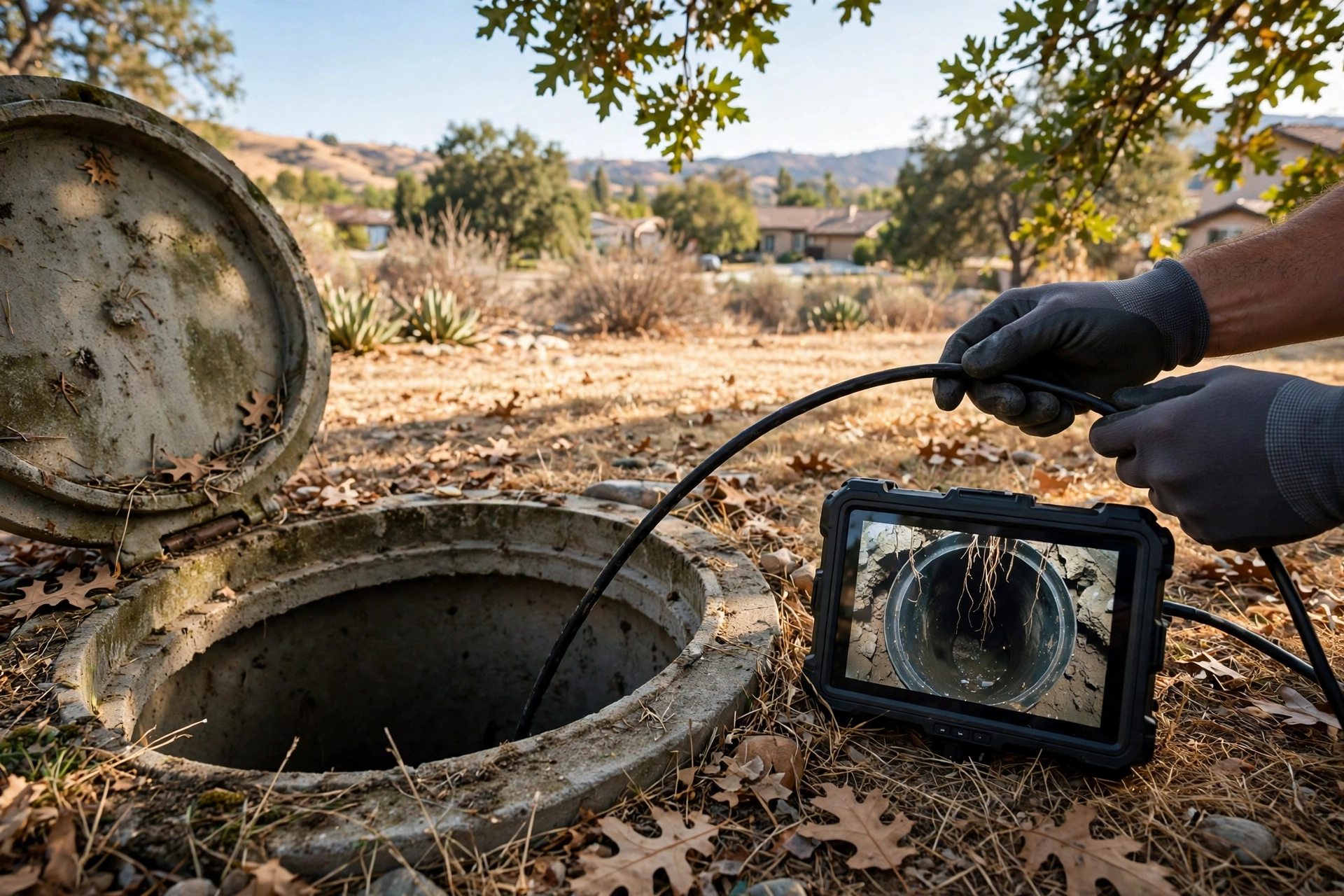
A camera inspection of the lines completes the picture where the surface cannot. It shows root intrusion, crushed pipe, sagging lines and blockages that no surface check can find. Not every inspection needs a camera, but when the field shows symptoms, or when the system is old, the camera is what turns a suspicion into a diagnosis.
Inspection for real estate transactions
A septic inspection is one of the most valuable steps in buying or selling a home with a septic system. For a buyer, it answers the question that no other inspection can: is the underground system sound, or is a five-figure replacement hiding under the lawn? For a seller, it removes a surprise from escrow. A clean report with a recent pump-out is a selling point. A report that finds a problem early gives the seller time to fix it on their own terms instead of losing the sale over it.
The inspection is usually ordered during the contingency period, and the report becomes part of the negotiation. A failed field, a cracked tank or a broken baffle can be a repair credit, a seller repair, or a reason to walk away, depending on the contract. What matters is that the finding is documented by a qualified inspector in a written report, not guessed at by a general home inspector who never opened the tank.
Lenders and insurers may also ask for the report, particularly on older systems or rural properties. Keep the report with the house records after the sale. It becomes the baseline for the next owner: the pump-out date, the sludge measurements and the field condition on the day of the sale are the facts the next inspection will be compared against.
Common findings and what they mean
The most common finding is a tank that is overdue for pumping. It is also the best news an inspection can deliver, because it is fixed by a pump-out. A tank full of sludge with an intact baffle and a healthy field is a maintenance item, not a failure, and the inspection report will say so plainly.
More serious findings include a broken or missing baffle, a cracked tank wall or lid, a distribution box out of level, and a field that will not accept water. A broken baffle is a repair that protects the field. A cracked tank usually means replacement. A field that fails the flow test needs further investigation, and may need repair or replacement depending on the soil and the extent of the clogging. Each finding comes with a next step in the report, so the homeowner is never left with a problem and no plan.
Some findings are about the house, not the system: a garbage disposal that sends food waste into the tank, a leaking toilet that floods the field, or a water softener discharging into the system. These are habits and fixtures, and the report will flag them because they shorten the life of any system, however well built.
What an inspection costs
Inspection cost depends on scope. A basic inspection of an accessible tank with a written report is at the low end. A full inspection with a flow test, a camera inspection and a real estate certification is at the high end. Published guides like Angi or This Old House put typical market ranges for septic inspections roughly at $150 to $900, with simpler inspections at the low end and full real estate inspections with camera work at the high end. Those are market ranges, not our prices.
Our published price is the pump-out range: $485 to $780 for a standard tank from 1,000 gallons in Thousand Oaks. Many inspections include a pump-out, because the tank has to be empty before the baffles and walls can be seen properly, and the pump-out is quoted with the inspection so there are no surprises. Ask for the inspection scope in writing before you book: what is opened, what is measured, whether a camera is included, and what the report contains.
After the inspection: your report
The report is the product of the inspection, and it should be readable by someone who is not a septic technician. It lists the system type and age, the tank size, the sludge and scum measurements, the condition of the baffles, filter, walls and lid, the distribution box level, the field condition, the flow test result, and any camera findings. Each item says what was found and whether it is normal, needs attention, or needs repair.
The report also gives the next steps in order: what to do now, what to plan for, and when the next inspection or pump-out is due. A standard residential tank should be pumped every three to five years, and the report will set the date based on what was measured, not on a generic calendar. Keep the report with the permit, the design drawings and the pump-out records. Together they are the system's history, and they are what the next buyer, the next inspector and the county will ask for.
If the report recommends a repair, it should say which repair, why it is needed, and what happens if it is left undone. That ordering matters: a broken baffle left for a year can cost a field, while a cracked lid left for a month is a safety hazard today. A good report separates the urgent from the eventual, so the homeowner can act in the right order instead of guessing which finding matters most.
Before you book a septic inspection
- Gather any records: permit, design drawings, pump-out history
- Confirm the scope in writing: tank, field, flow test, camera, report
- Make sure the tank lid is accessible or that the crew can locate it
- Ask whether a pump-out is included — the tank must be empty to inspect
- For a sale, book inside the contingency period, not after it closes
- Keep the written report with the house records after the visit
What it costs
A standard septic pump-out in Thousand Oaks is $485–$780 for a tank from 1,000 gallons — upfront and flat-rate, with no hidden disposal or cover fees. The exact number depends on tank size, sludge level, lid depth and access.
- Pumping (standard tank, 1,000+ gal): $485–$780
- Inspection: priced by scope — see the inspection page
- Emergency / after-hours: factors on the cost guide
How a pump-out works, step by step
Every pump-out follows the same five steps — no shortcuts, no surprises. You see what we do, and you get a report that proves it.
On-site inspection & tank location
We find the tank, check the access, and look at the system before any work starts — lids, risers, baffles and the drain field.
Cover access & vacuum line setup
The tank is opened safely and the vacuum line is run from the truck. No mess in the yard, no damage to the landscaping.
Complete sludge & liquid removal
The truck removes the sludge, the scum and the liquid — the whole tank, both compartments, not just the top layer.
Tank cleaning & baffle inspection
The tank is washed down and the inlet and outlet baffles are checked. A broken baffle is the most common reason a field fails — we catch it here.
Eco-friendly disposal & certified reporting
Waste goes to a certified disposal facility, never dumped. You get a written report of what was pumped and the condition of the tank.
Tell us about your septic system
A few details is all it takes — what is happening, where you are, and anything you already know. We reply within one business day with next steps and a free estimate.
Prefer to read first? The cost guide breaks down every price factor, and the inspection page explains what a report covers.
Request a Free Estimate
Tell us about your septic system — we reply within one business day.