Septic Tank Pumping in Westlake Village, CA
Hillside lots, larger homes and lake-adjacent properties — Westlake Village systems need a crew that knows the terrain. Family owned since 2023, 24/7 dispatch from nearby Thousand Oaks.
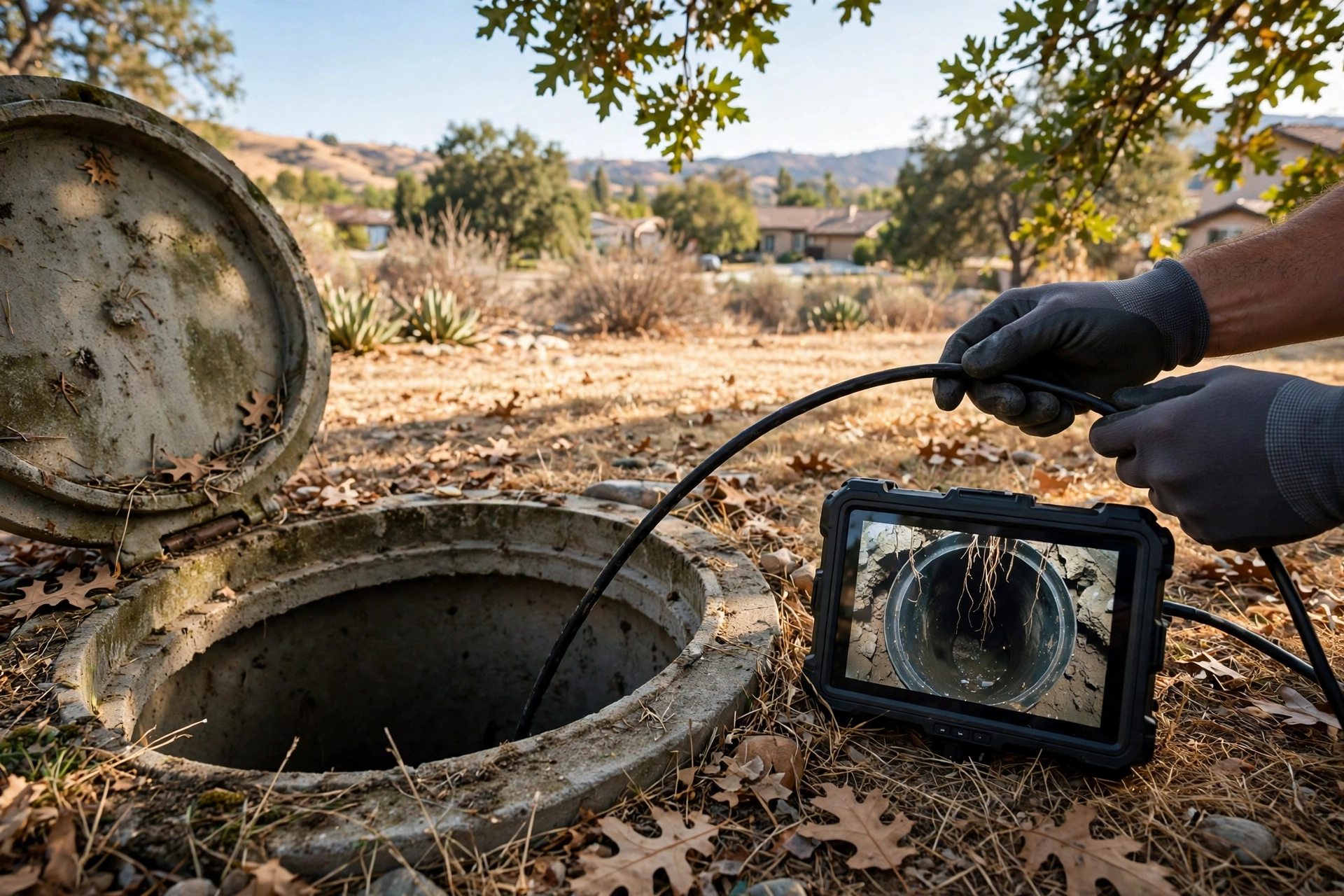 Septic pumping in Westlake Village, CA
Westlake Village is the lake community at the east end of the Conejo Valley, and its septic systems reflect the place: larger homes on hillside and lake-adjacent lots, with tanks and fields fitted into terrain that is anything but flat. Waste Cleanup Services is a family-owned business operating since 2023 from 934 Warwick Ave in nearby Thousand Oaks, and we pump Westlake Village systems every week. Call (805) 307-3409 any time: our dispatch runs 24/7, and every job is handled by our own licensed, bonded and fully insured crew.
The first thing to know about Westlake Village is the county line. The city is in Los Angeles County, so its septic permits run through LA County Public Health — a different office than the Ventura County Environmental Health office that covers Thousand Oaks, Newbury Park and Moorpark. Routine pumping needs no permit in either county, so a pump-out is the same simple booking here as anywhere else. But an install, a major repair or a replacement field follows county rules, and we handle that paperwork as part of those jobs.
The second thing is the terrain. Hillside lots mean tanks and fields are often stepped, terraced or tucked into the slope, and the vacuum truck may not be able to park close to the tank. Larger homes mean larger tanks and more water moving through the system every day. Both facts point the same way: measure the system, do not assume it. This page covers what a pump-out costs here, how often to schedule one, what LA County requires, and the problems we see most often on Westlake Village systems.
Your city's rules
Who permits your septic work
LA County Public Health. Westlake Village is in Los Angeles County, so septic permits run through LA County Public Health, not Ventura County. Routine pumping needs no permit — you can book a pump-out any time without county paperwork. Permits are required for new septic installs and major repairs, and we handle the permit paperwork as part of those jobs.
- LA County Public Health is the permit authority here — routine pumping needs no permit, but new installs and major repairs do, under county rules that differ from Ventura County
- Hillside lots are common in Westlake Village, so tank placement, field setbacks and truck access all need more planning than on a flat lot
- Larger homes mean larger tanks and heavier water use — the 3–5 year pump cycle should be measured, not assumed
- Real-estate transactions are frequent here, so inspection and escrow certification is a common request alongside pumping
What it costs in Westlake Village
A standard pump-out in Thousand Oaks is $485–$780 for a tank from 1,000 gallons. In Westlake Village, the number lands where your tank lands — size, sludge level, lid depth and access.
- Pumping (standard tank, 1,000+ gal): $485–$780
- Inspection: priced by scope — see the inspection page
- Full breakdown: cost guide
Septic pumping in Westlake Village
A septic tank holds wastewater long enough for solids to settle as sludge and scum to float, while clarified liquid flows out to the leach field. A standard residential tank holds 1,000 to 1,500 gallons, and once the sludge and scum layers take up too much of the tank, solids start escaping toward the field. Pumping removes the sludge and the liquid, resets the tank, and protects the field — the part of the system that is far more expensive to replace than the tank is to pump.
In Westlake Village the practical challenge is usually access. Hillside lots can put the tank well below or above street level, behind a gate, or at the end of a steep drive the truck cannot climb. The vacuum line can run a long way, but it cannot run everywhere, and a tank tucked into a slope needs a plan before the truck arrives. Locating the tank and getting access to the covers is the first step of every pump-out, and on a hillside property it is worth a phone call first so we arrive with the right setup.
Every pump-out follows the same five steps: inspection and tank location, cover access and vacuum setup, complete sludge and liquid removal, tank cleaning and baffle inspection, and eco-friendly disposal with certified reporting. You get a written record of what was removed and the condition of the tank — a document that matters here, because Westlake Village homes change hands often and a buyer, a lender or an inspector will ask for the system's history. The same process applies to commercial systems, which we pump on scheduled contracts as well as one-off calls.
What a pump-out costs here
Our published rate is $485–$780 for a standard tank from 1,000 gallons in Thousand Oaks, quoted as an upfront flat rate with no hidden disposal or cover fees. A Westlake Village pump-out is priced the same way — tank size, sludge level, lid depth and access — and we confirm the exact price on site before any work starts, so the number you agree to is the number on the invoice. The published Thousand Oaks range is the honest starting point; the on-site inspection is what sets the final number.
In Westlake Village, tank size and access are the factors most likely to move the price. Larger homes often mean larger tanks, and a larger tank holds more to remove. Hillside placement can mean a longer hose run, a truck parked farther from the tank, or extra time getting the covers open on a slope. A tank that has gone years past its pump date carries a heavier sludge load and takes longer to empty. None of these are hidden charges — they are visible in the first minutes of the inspection, and we price them before the vacuum starts.
For context, the typical market range published by national guides for a standard pump-out is roughly $300–$700, with most jobs landing near the middle of that band — a useful benchmark, not our price. Emergency and after-hours pump-outs typically run higher across the market, commonly $600–$1,600 or more, because they pull a crew and truck out on short notice. If your job is not an emergency, booking a regular slot is the cheapest way to get it done.
When to pump: the 3–5 year rule
The rule for a standard residential tank is simple: pump every 3 to 5 years. A 1,000- to 1,500-gallon tank serving a typical household fills its sludge and scum layers to the point where pumping is due in about that window. In Westlake Village, do not stretch the rule on the strength of a large tank: larger homes put more water through the system, and heavier use shortens the interval even when the tank is big. The real measure is the sludge and scum depth, which we check at every visit.
Your system will usually tell you when it is overdue. Slow drains across the house, gurgling sounds from fixtures, odors near the tank or the field, and a patch of ground over the field that stays soggy or grows noticeably faster than the rest are all signs the tank is full. A single slow drain is usually a clog in one line; slow drains everywhere at once point to the tank. If sewage is backing up into the house or surfacing in the yard, that is an emergency — stop using water and call our 24/7 dispatch.
Waiting past the pump date is the most expensive mistake a septic owner can make. A full tank sends solids into the leach field, where they seal the soil and choke off absorption. A field that fails from solids overload cannot be fixed with a pump-out — it needs repair or replacement, and typical market ranges for a conventional drain-field replacement run $3,600–$12,500. On a hillside lot, where a replacement field may need regrading and new setbacks, the cost of waiting only grows. A pump-out every few years is the cheapest insurance a septic system has.
Permits: LA County rules
Routine pumping needs no permit in Westlake Village. You can book a pump-out, an inspection or a cleaning any time, and no county paperwork is involved — the job is maintenance on an existing, permitted system. The same goes for minor component work that does not change the system, such as replacing a riser lid or cleaning an effluent filter. If you are unsure whether a job counts as routine, call us and we will tell you before you book.
Permits are required when the system itself changes: a new septic install, a major repair, an expansion, or a replacement field. In Westlake Village those permits run through LA County Public Health — a different office and process than Ventura County Environmental Health, which covers Thousand Oaks, Newbury Park and Moorpark. The county reviews the design, the soil evaluation and the setbacks before work starts, and inspects before backfill. We handle the permit paperwork as part of install and major repair jobs, and we do not start digging until the county has signed off.
One more county difference worth knowing: if you are buying or selling a home here, an inspection and real-estate certification is a common request — and it is a service, not a permit. It documents the tank, the baffles, the field and the sludge and scum levels in a written report for the transaction. We provide it as a standalone inspection or alongside a pump-out, and the report is yours to hand to a buyer, a lender or an inspector.
Common septic problems in Westlake Village
The most common problem we find in Westlake Village is a tank that has gone too long between pump-outs, on a system sized for a smaller household than the one using it now. The sludge layer creeps up, solids slip past the outlet baffle, and the leach field starts to clog. By the time the ground over the field turns soggy or the drains slow down, the field has already taken damage. The fix starts with a pump-out and an honest assessment of the field — and the prevention is a pump-out on schedule, every 3 to 5 years, measured against actual use rather than the calendar alone.
Hillside terrain brings its own problems. Slopes put extra load on pipes and field lines, and a lateral that shifts on a slope can stop distributing evenly, overloading one part of the field while the rest sits idle. Erosion and grading changes over the years can expose shallow lines or bury lids deeper than they were. Heavy vehicles on a sloped drive over or near the field compact the soil and can crush shallow laterals. A field on a slope that starts surfacing effluent needs attention quickly, because gravity carries the problem downhill.
The third pattern is age in the components. Baffles wear and break, letting solids straight into the field; older lids crack and become a safety hazard; root intrusion from the mature trees common on larger lots finds its way into pipes and field lines. We check the baffles on every pump-out, because a baffle is a small repair that prevents a large one — and on a system where the field is hard to reach and expensive to replace, that small repair matters more than most.
Pumping in Westlake Village, step by step
The same five steps on every job — the office that permits the work is local, the process is not.
On-site inspection & tank location
We find the tank, check the access, and look at the system before any work starts — lids, risers, baffles and the drain field.
Cover access & vacuum line setup
The tank is opened safely and the vacuum line is run from the truck. No mess in the yard, no damage to the landscaping.
Complete sludge & liquid removal
The truck removes the sludge, the scum and the liquid — the whole tank, both compartments, not just the top layer.
Tank cleaning & baffle inspection
The tank is washed down and the inlet and outlet baffles are checked. A broken baffle is the most common reason a field fails — we catch it here.
Eco-friendly disposal & certified reporting
Waste goes to a certified disposal facility, never dumped. You get a written report of what was pumped and the condition of the tank.
Tell us about your Westlake Village septic system
A few details is all it takes — what is happening, what you already know, and anything about the tank. We reply within one business day with next steps and a free estimate.
The inspection page explains what a report covers, and the cost guide breaks down every price factor.
Request a Free Estimate
Tell us about your septic system — we reply within one business day.