Septic Tank Pumping in Newbury Park, CA
Larger lots, older systems and long driveways — Newbury Park is septic country, and we pump it every week. Family owned since 2023, 24/7 dispatch from nearby Thousand Oaks.
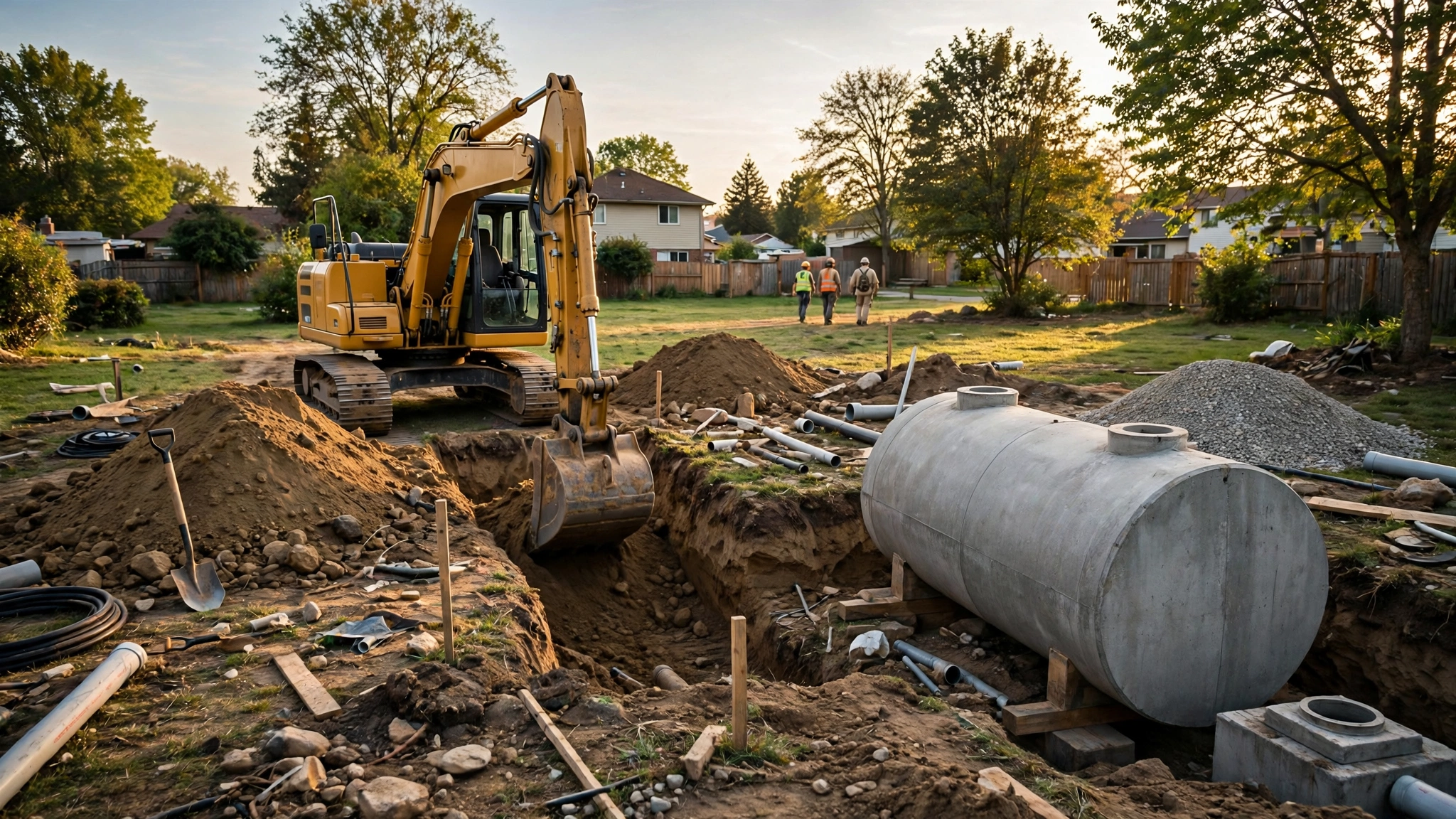 Septic pumping in Newbury Park, CA
Newbury Park sits at the west end of the Conejo Valley, and it is the most septic-heavy part of our service area. The lots are larger, the properties are more spread out, and many homes were built before the valley's later subdivisions — which means a septic tank is not the exception here, it is the norm. Waste Cleanup Services is a family-owned business operating since 2023 from 934 Warwick Ave in nearby Thousand Oaks, and Newbury Park is one of the places our trucks go most often. Call (805) 307-3409 any time: our dispatch runs 24/7, and every job is handled by our own licensed, bonded and fully insured crew.
What makes Newbury Park different is space. A tank here can sit a long way back from the road, down a long driveway, behind a gate, or under a yard that has had decades to grow over the lids. That is all part of the job for us — locating the tank and getting access to the covers is the first step of every pump-out — but it is the reason a Newbury Park pump-out is priced on site rather than over the phone. Lid depth, hose run and access are real cost factors here, and we would rather measure them than guess at them.
The systems themselves skew older, too. Many Newbury Park tanks went in when the area was still largely rural, and an older tank with original baffles and clay pipe needs a closer eye than a newer one. The 3–5 year pump cycle matters more, not less, on an older system — and the pump-out itself is the best time to catch a failing baffle or a cracked lid, because we inspect both while the tank is open. This page covers what a pump-out costs here, how often to schedule one, what Ventura County requires, and the problems we see most often on Newbury Park systems.
Your city's rules
Who permits your septic work
Ventura County Environmental Health. Newbury Park is in Ventura County, so septic permits run through Ventura County Environmental Health. Routine pumping needs no permit — you can book a pump-out any time without county paperwork. Permits are required for new septic installs and major repairs, and we handle the permit paperwork as part of those jobs.
- Ventura County Environmental Health is the permit authority here — routine pumping needs no permit, but new installs and major repairs do
- Semi-rural lots are the norm in Newbury Park, so tanks often sit far back from the street and lids are frequently buried deep
- Many properties here predate the valley's later subdivisions, so older tanks, clay pipe and original baffles are common finds
- Properties with outbuildings, stables and extra structures put more demand on a single system — household size and water use matter more here
What it costs in Newbury Park
A standard pump-out in Thousand Oaks is $485–$780 for a tank from 1,000 gallons. In Newbury Park, the number lands where your tank lands — size, sludge level, lid depth and access.
- Pumping (standard tank, 1,000+ gal): $485–$780
- Inspection: priced by scope — see the inspection page
- Full breakdown: cost guide
Septic pumping in Newbury Park
A septic tank holds wastewater long enough for solids to settle as sludge and scum to float, while clarified liquid flows out to the leach field. A standard residential tank holds 1,000 to 1,500 gallons, and once the sludge and scum layers take up too much of the tank, solids start escaping toward the field. Pumping removes the sludge and the liquid, resets the tank, and protects the field — the part of the system that is far more expensive to replace than the tank is to pump.
In Newbury Park the first challenge is usually finding and reaching the tank. Decades of landscaping, grading and outbuildings can bury lids deep or hide them entirely, and a long driveway can put the tank a long hose run from where the truck can park. We locate the tank on site, dig out buried lids, and run the vacuum line to wherever the tank sits — it is routine work, but it is work that takes time, and it is priced into the job once we see it.
Every pump-out follows the same five steps: inspection and tank location, cover access and vacuum setup, complete sludge and liquid removal, tank cleaning and baffle inspection, and eco-friendly disposal with certified reporting. You get a written record of what was removed and the condition of the tank, which is especially useful on an older system — it builds a history that the next owner, the next inspector or the next repair crew can work from. The same process applies to commercial systems, which we pump on scheduled contracts as well as one-off calls.
What a pump-out costs here
Our published rate is $485–$780 for a standard tank from 1,000 gallons in Thousand Oaks, quoted as an upfront flat rate with no hidden disposal or cover fees. A Newbury Park pump-out is priced the same way — tank size, sludge level, lid depth and access — and we confirm the exact price on site before any work starts, so the number you agree to is the number on the invoice. The published Thousand Oaks range is the honest starting point; the on-site inspection is what sets the final number.
In Newbury Park, access is the factor most likely to move the price. A tank far back from the street means a longer hose run; lids buried under years of soil mean digging time; a gate, a slope or a narrow drive can limit where the truck parks. Tank size and sludge level matter too — a larger tank holds more to remove, and a tank years past its pump date carries a heavier load. None of these are hidden charges. They are visible in the first minutes of the inspection, and we price them before the vacuum starts.
For context, the typical market range published by national guides for a standard pump-out is roughly $300–$700, with most jobs landing near the middle of that band — a useful benchmark, not our price. Emergency and after-hours pump-outs typically run higher across the market, commonly $600–$1,600 or more, because they pull a crew and truck out on short notice. On a larger or older property, the cheapest pump-out is the scheduled one: it keeps the system on the cycle that prevents the emergency call in the first place.
When to pump: the 3–5 year rule
The rule for a standard residential tank is simple: pump every 3 to 5 years. A 1,000- to 1,500-gallon tank serving a typical household fills its sludge and scum layers to the point where pumping is due in about that window. In Newbury Park, err toward the short end of the range: larger households, extra structures, heavy water use and garbage disposals all shorten the interval, and an older tank is less forgiving of a missed pump date. The real measure is the sludge and scum depth, which we check at every visit.
Your system will usually tell you when it is overdue. Slow drains across the house, gurgling sounds from fixtures, odors near the tank or the field, and a patch of ground over the field that stays soggy or grows noticeably faster than the rest are all signs the tank is full. A single slow drain is usually a clog in one line; slow drains everywhere at once point to the tank. If sewage is backing up into the house or surfacing in the yard, that is an emergency — stop using water and call our 24/7 dispatch.
Waiting past the pump date is the most expensive mistake a septic owner can make. A full tank sends solids into the leach field, where they seal the soil and choke off absorption. A field that fails from solids overload cannot be fixed with a pump-out — it needs repair or replacement, and typical market ranges for a conventional drain-field replacement run $3,600–$12,500. On an older Newbury Park system, where the field itself may be decades old, a pump-out on schedule is the cheapest protection the system has.
Permits: what needs one and what doesn't
Routine pumping needs no permit in Newbury Park. You can book a pump-out, an inspection or a cleaning any time, and no county paperwork is involved — the job is maintenance on an existing, permitted system. The same goes for minor component work that does not change the system, such as replacing a riser lid or cleaning an effluent filter. If you are unsure whether a job counts as routine, call us and we will tell you before you book.
Permits are required when the system itself changes: a new septic install, a major repair, an expansion, or a replacement field. Those permits run through Ventura County Environmental Health, which reviews the design, the soil evaluation and the setbacks before work starts, and inspects before backfill. We handle the permit paperwork as part of install and major repair jobs, and we do not start digging until the county has signed off. If you are buying or selling a home with a septic system, an inspection and real-estate certification is a separate service — it documents the system's condition for the transaction, and it is not a county permit.
Common septic problems in Newbury Park
The most common problem we find in Newbury Park is an overdue pump-out on an older system. The sludge layer creeps up, solids slip past the outlet baffle, and the leach field starts to clog. By the time the ground over the field turns soggy or the drains slow down, the field has already taken damage. The fix starts with a pump-out and an honest assessment of the field — and the prevention is a pump-out on schedule, every 3 to 5 years, on the short end of the range for older tanks.
Age shows up in the components. Original baffles wear and break, letting solids straight into the field; older lids crack and become a safety hazard; clay pipe, common in the area's earliest systems, cracks and lets roots in. We check the baffles on every pump-out and note the condition of the lids and risers, because a baffle is a small repair that prevents a large one — and on a system this old, the pump-out is often the first time anyone has looked inside the tank in years.
The third pattern comes with the lots. Larger properties mean more trees, and tree roots find their way into pipes and field lines. Outbuildings and extra structures add wastewater load to a system that was sized for a smaller household. Heavy vehicles parked or driven over the field compact the soil and can crush shallow laterals. And a lush green stripe over the field lines in a dry climate is usually effluent reaching the surface, not good lawn care. None of these problems is unusual, and all of them are cheaper to fix when they are caught early — which is what a scheduled pump-out and inspection are for.
Pumping in Newbury Park, step by step
The same five steps on every job — the office that permits the work is local, the process is not.
On-site inspection & tank location
We find the tank, check the access, and look at the system before any work starts — lids, risers, baffles and the drain field.
Cover access & vacuum line setup
The tank is opened safely and the vacuum line is run from the truck. No mess in the yard, no damage to the landscaping.
Complete sludge & liquid removal
The truck removes the sludge, the scum and the liquid — the whole tank, both compartments, not just the top layer.
Tank cleaning & baffle inspection
The tank is washed down and the inlet and outlet baffles are checked. A broken baffle is the most common reason a field fails — we catch it here.
Eco-friendly disposal & certified reporting
Waste goes to a certified disposal facility, never dumped. You get a written report of what was pumped and the condition of the tank.
Tell us about your Newbury Park septic system
A few details is all it takes — what is happening, what you already know, and anything about the tank. We reply within one business day with next steps and a free estimate.
The inspection page explains what a report covers, and the cost guide breaks down every price factor.
Request a Free Estimate
Tell us about your septic system — we reply within one business day.