Grease Trap Cleaning
A full grease trap backs up a kitchen, fills it with odor, and puts a restaurant at risk of a shutdown. We clean traps on schedule for restaurants and commercial kitchens across the Conejo Valley. Call (805) 307-3409.
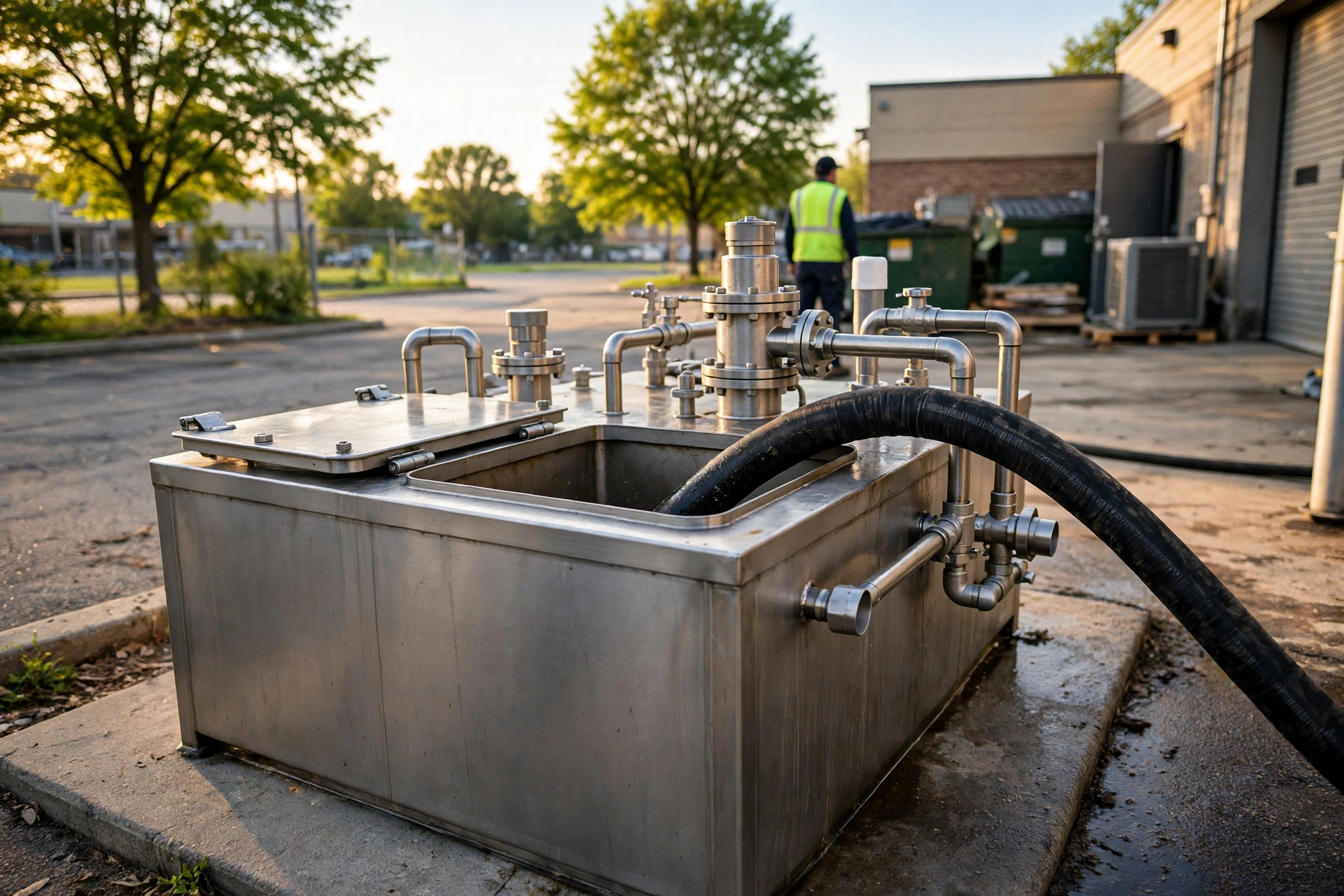 Grease Trap
Every commercial kitchen produces fats, oils and grease, known in the trade as FOG. When hot wash water carries FOG down the drain, it cools, hardens and sticks to the pipes. Left alone, it builds into a blockage that backs up the kitchen, floods the floor and shuts down service. A grease trap sits in the drain line to catch that FOG before it reaches the sewer or the septic system, and it only works if it is emptied on schedule.
Grease trap cleaning is a different job from septic pumping, but the two are closely related. Many restaurants and food businesses in the Conejo Valley run on septic systems, and a trap that overflows sends grease straight into the tank and the field, where it does real damage. Cleaning the trap protects the kitchen, the plumbing and the septic system behind it, all at once.
Waste Cleanup Services, operating as Flex Sanitation, is a family owned and operated company based at 934 Warwick Ave in Thousand Oaks, serving Thousand Oaks, Newbury Park, Westlake Village, Agoura Hills and Moorpark. We are licensed, bonded and fully insured. This page explains what a grease trap does, how to tell when it needs cleaning, how a cleaning works, how often to schedule it, and what it costs.
What a grease trap does
A grease trap, or grease interceptor, is a box in the drain line between the kitchen sinks and the sewer or septic system. Wastewater flows in, slows down, and the grease floats to the top while the solids sink to the bottom. The clarified water in the middle flows out to the drain. The trap holds the grease and the solids so they never reach the pipes beyond it.
Traps come in two sizes. A small under-sink trap serves a single kitchen or a small cafe. A large outdoor interceptor, often buried in the ground, serves a full restaurant or a food facility. Both work the same way, and both fail the same way: they fill up. When a trap is full, grease passes straight through it, and the protection it was supposed to provide disappears.
Signs your grease trap needs cleaning
Slow drains in the kitchen are the first sign. When the trap is full, water backs up through the sinks and the floor drains, and the kitchen starts to smell. A strong grease odor near the trap or the drains is another sign, as is visible grease in the sinks or on the floor. In a restaurant, any of these during service is an emergency, not a maintenance item.
The surest sign is the calendar. A trap that has not been cleaned in months is overdue, whatever the drains are doing. Traps fill silently, and by the time the symptoms appear, the grease has already passed into the lines. Regular inspection of the trap contents, measuring the grease layer against the trap depth, tells you when to clean before the kitchen notices.
A backup that reaches the dining area is more than a plumbing problem: it is a health and reputation problem. Grease on a kitchen floor is a slip hazard, and a health inspector who finds a full trap or a backed-up drain can shut a kitchen down until the problem is fixed. That is why the cleaning schedule belongs on the same calendar as the food orders and the staff rota, not left to whoever remembers it first.
How grease trap cleaning works
A cleaning starts with the trap opened and the contents measured. The crew pumps out the entire contents of the trap: the floating grease, the water and the settled solids at the bottom. A partial pump-out is not a cleaning, because it leaves the solids that cause the next blockage. The whole trap is emptied.
Then the walls and the baffles are scraped clean, the inlet and outlet are checked, and the trap is inspected for cracks, corrosion and damaged fittings. The waste is taken away for certified disposal at a licensed facility, and the visit is documented. The trap is left empty, clean and ready to work, and the crew notes the condition so the next visit can be scheduled from facts rather than from memory.
A cleaning is also the moment when small problems get caught early. A baffle that is starting to corrode, a lid that no longer seals, or a trap that is undersized for the kitchen it serves are all visible once the trap is empty. Fixing a baffle or replacing a lid during a scheduled cleaning costs far less than fixing it after a backup, and an undersized trap is worth knowing about before the health inspector finds it.
How often to clean it
How often depends on the kitchen. A busy restaurant with fryers running all day fills a trap far faster than a small cafe. The common industry rule is to clean when the trap reaches about a quarter full of grease and solids, and for many restaurants that means a quarterly cleaning. High-volume kitchens may need monthly service, while a low-volume kitchen may manage with a longer interval.
The right interval is set by measurement, not by habit. After the first cleaning, the crew can measure how fast the trap fills and set a schedule that keeps it well below full between visits. A scheduled contract removes the guesswork: the crew arrives on the agreed day, the trap is cleaned, and the kitchen never has to think about it until the next visit.
What grease trap cleaning costs
Grease trap cleaning is priced by the size of the trap and the volume of waste removed. A small under-sink trap is a quick job. A large outdoor interceptor takes longer, needs a vacuum truck, and produces more waste for disposal. Frequency matters too: a trap cleaned on a regular schedule is faster and cheaper per visit than one that has been neglected for a year, because the grease has not hardened into a solid mass.
Our published price is the pump-out range for septic tanks: $485 to $780 for a standard tank from 1,000 gallons in Thousand Oaks. Grease trap work is quoted separately, based on trap size and schedule, and a scheduled contract is usually the most cost-effective way to keep a kitchen running. Ask for the quote in writing, with the trap size, the disposal and the frequency listed, so the number can be compared fairly.
Grease traps and your septic system
A grease trap and a septic tank are different systems, but they protect each other. The trap catches the grease before it reaches the tank. Without a trap, or with a full one, grease flows into the septic tank, coats the baffles, passes into the field, and seals the soil. A septic system behind a restaurant kitchen fails fast when the trap is neglected, and the repair is a field job, not a kitchen job.
That is why restaurants on septic need both services on a schedule: the trap cleaned regularly, and the tank pumped every three to five years, or more often for a high-volume kitchen. One contract that covers both keeps the whole system working, and it means a single crew that knows the property, the trap size and the tank location. If your kitchen runs on septic, tell the crew: the service plan is different from a kitchen on city sewer.
Your grease trap maintenance checklist
- Know your trap: size, location and last cleaning date
- Clean when the trap reaches about a quarter full — do not wait for symptoms
- Always pump the full contents, including the settled solids
- Scrape the walls and baffles and inspect for cracks at every visit
- Keep disposal records — certified disposal is part of the service
- Put the trap on a scheduled contract so it never gets forgotten
What it costs
A standard septic pump-out in Thousand Oaks is $485–$780 for a tank from 1,000 gallons — upfront and flat-rate, with no hidden disposal or cover fees. The exact number depends on tank size, sludge level, lid depth and access.
- Pumping (standard tank, 1,000+ gal): $485–$780
- Inspection: priced by scope — see the inspection page
- Emergency / after-hours: factors on the cost guide
How a pump-out works, step by step
Every pump-out follows the same five steps — no shortcuts, no surprises. You see what we do, and you get a report that proves it.
On-site inspection & tank location
We find the tank, check the access, and look at the system before any work starts — lids, risers, baffles and the drain field.
Cover access & vacuum line setup
The tank is opened safely and the vacuum line is run from the truck. No mess in the yard, no damage to the landscaping.
Complete sludge & liquid removal
The truck removes the sludge, the scum and the liquid — the whole tank, both compartments, not just the top layer.
Tank cleaning & baffle inspection
The tank is washed down and the inlet and outlet baffles are checked. A broken baffle is the most common reason a field fails — we catch it here.
Eco-friendly disposal & certified reporting
Waste goes to a certified disposal facility, never dumped. You get a written report of what was pumped and the condition of the tank.
Tell us about your septic system
A few details is all it takes — what is happening, where you are, and anything you already know. We reply within one business day with next steps and a free estimate.
Prefer to read first? The cost guide breaks down every price factor, and the inspection page explains what a report covers.
Request a Free Estimate
Tell us about your septic system — we reply within one business day.